Posts mit dem Label Philippines werden angezeigt. Alle Posts anzeigen

Mittwoch, 8. April 2020

Corona Virus

The whole world is in panic - covid 19 - Corona Virus


As well as in the Philippines and in Switzerland the most countrys all over the world are
lockeddown - shotdown
borders are closed - social distance 2m - stay at home 2-5 people can go together - no business exept pharmacy, grocerys, post, bancomat, rubish trucks ... everything we need to survive - so flower shops, barber shops are closed.

We keep in connection by phone - skype - online - Facebook, WhatsApp

Home work business for the most people - schools are closed, but they get teached online.

Good things:
- Clean good air - no more smog areas
- trafffic goes back over 50%
- Natur is coming back with birds, dolphins ..

News i found:

PH coronavirus cases rise to 3,870, deaths at 182

The Department of Health also reports that 12 more patients have recovered – the highest number of recoveries reported in a single day – for a total of 96 recoveries.
To stay updated on news, advisories, and explainers, check out our special coverage page, “Novel Coronavirus Outbreak.”
The new virus has infected more than 1.4 million of the global population, with over 82,000 deaths and 300,000 recoveries. – Rappler.com
Vergleich Schweiz: vom 7.April 2020:
Coronavirus positiv getestet: 22 242 Personen  Verstorben: 641 Personen

8. April 2020, 7 Uhr:

Ansteckungen mit dem neuen Coronavirus in mehr als 200 Ländern oder Regionen

Bestätige Fälle, mehr als
Verstorben, mehr als
Italien
135 500
17 000
Frankreich
78 000
10 000
Deutschland
107 500
2 000
Österreich
12 500
200
Weltweit
1 430 000
82 000

VIRUS: Ausgangssperre auf den Philippinen zwei Wochen verlängert

07.04.2020 07:58:41
MANILA (dpa-AFX) - Im Kampf gegen die Ausbreitung des Coronavirus hat die Regierung der Philippinen die Ausgangsbeschränkungen auf der Hauptinsel Luzon um zwei Wochen bis zum 30. April verlängert. Der Schritt werde dem Land unter anderem mehr Zeit geben, die Zahl der Tests zu erhöhen, sagte der zuständige Regierungsbeamte Karlo Nograles am Dienstag in Manila. "Wir haben den Höhepunkt der Infektionen noch nicht erreicht", warnte er.
Auf Luzon, wo mehr als die Hälfte der über 100 Millionen Einwohner des Landes leben, gelten seit dem 16. März strenge Ausgangsbeschränkungen. In dem südostasiatischen Inselstaat haben die Gesundheitsbehörden bislang 3660 bestätigte Fälle von Sars-CoV-2-Infektionen gemeldet, 163 Infizierte starben./gal/DP/mis

Philippinen: Schießbefehl zur Durchsetzung von Coronamaßnahmen

2. April 2020Sie sehen den philippinischen Präsidenten Duterte, er hält im Juli 2016 eine Rede an die Nation. (AFP / Ted Aljibe)
Der philippinische Präsident Duterte (AFP / Ted Aljibe)
Auf den Philippinen soll die Durchsetzung der Maßnahmen gegen die Verbreitung des Coronavirus notfalls mit Waffengewalt durchgesetzt werden.
Präsident Duterte erteilte Polizei und Militär einen Schießbefehl. Wörtlich sagte er in einer Fernsehansprache, wenn die Menschen Ärger machten, solle man sie erschießen. Dabei habe er insbesondere linke Gruppen im Auge, die in der Coronakrise Unfrieden sähen wollten.

Die philippinische Polizei relativierte später die Worte des Präsidenten und erklärte, niemand werde erschossen. Dutertes Schießbefehl erinnert an seinen sogenannten Krieg gegen die Drogen, bei dem seit seinem Amtsantritt im Sommer 2016 von der Polizei und anonymen Todesschwadronen mehr als 30.000 Menschen getötet wurden.

Coron Island = Ja, die gibt’s auf den Philippinen. Lies:
Calamanian Islands, Palawan Island – West of the big Luzon Island, with capital City Manila.
Dienstag 31.03.2020 13:38 - Krone.at  Quallen-Invasion vor philippinischem Strand
Normalerweise tummeln sich am Corong-Corong-Strand auf Palawan, einer Insel im Westen der Philippinen, unzählige Touristen. Die fehlen zwar zurzeit aufgrund der Coronavirus-Pandemie, dafür haben Tausende rosafarbene Quallen die Küste quasi übernommen.


R.I.P. Marina


Bild könnte enthalten: Pflanze und Essen

Palm Sunday, April 5th, 2020 


R.I.P.  Marina


Dear friends

I don't like to inform you. But i got bad news.

Marina died. A sad story. A "hirap" life ended, 

maybe because of this difficult Covid19 area. 

May God open his hands and welcomes her. 

And may we are careful to each other.                         Love gabi


foto feb 12, 2016

I met Marina several times in an outside Muntinlupa Prison. I could accompaign her a little bit with her housing, she got a new door with a locker, some clothes, bedding, a handy and we just spoke a lot together about her difficult life. I will keep her in my heart as  my lovely, smiling kaibigan.  Love Gabi


DEAR MY LOVLEY ANGEL,
in the darkest time of my life you came along and was there for me, brought me back to life.
You held my hand as nobody did, you gave me hope and strenght, you gave me back my dreams of a future, a future with you.
You sacrificed so much, you was so strong and i am so grateful for every moment of the past 13 years.
I miss your smile so much, your curly long hair, your voice and your smell, i miss it to hold you and sleep in your arms, you will stay in my heart for ever
Rest in peace my lovley Angel, my dear wife, i will love you the rest of my life and will remember every day the beautiful moments on your side

Your loving husband Christian


Condolences: (in Facebook)

Sj Gonzales‎ an Marina Viray
You will be missed, my dear friend, I know you hated the term "best friends" so I will refer to you as what you have always been to be, a friend. I will cherish my memory of you forever. Thank you for everything.

Snoopy Flitzebogen Dear Marina. Beautiful Girl, sleep well in heaven. I am sure there is a star only for you. And you look down to earth and take care of the ones you loved.
Snoopy Flitzebogen "There You'll Be (from "Pearl Harbor" soundtrack)...


My last visit: 

Surprise on Christmas Day, December 24, 2018

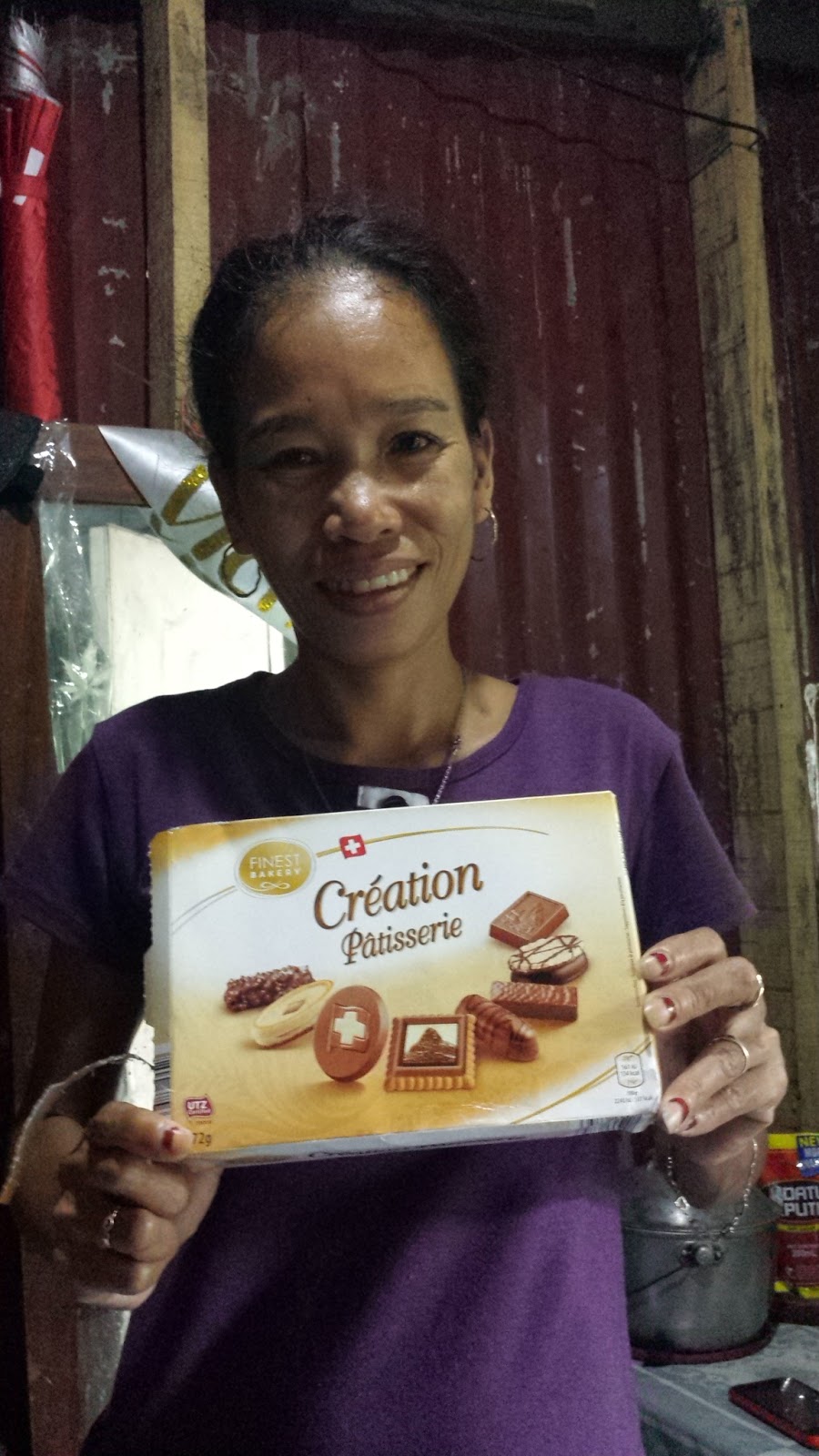
During my short visit i managed to find Marina again. She moved into another compound, in foot distance to the Maximum Prison. Lovely  children are living next to her simple room, and there was happiness, laughing around. As one of my gifts, I brought a box of Swiss chocolate, it seams that she whants to make a good advertisement. She told me about the difficulties to visit Christian, her housing and and and ...


Good bye 
my dear friend - keep your eyes on us 
<3 gabi
you found me under: Facebook/Messenger Gabi Sidler

Donnerstag, 23. März 2017

UPDATE - Todesstrafe Abstimmung - NO TO DEATH PENALTY

Talaga!  Voting for Death Penalty ?!  I say NO ! 

NO TO DEATH PENALTY


Students hold a noise barrage in Manila against extrajudicial killings and the proposed revival of the death penalty, March 8, 2017. CLAUDINE ATIOAN/CONTRIBUTOR


Die Todesstrafe soll wieder eingeführt werden, dies war die Ankündigung von Duterte bereits im Wahlkampf, Mai 2016. In der Abstimmung im Unterhaus am 9. März 2017 haben  die Abgeordneten so gestimmt: 216 dafür - 54 dagegen! Nun liegt es am Senat! CBCP ist aktiv und gibt den Politikern Argumente und das Volk demonstrierte z.B. mit dem Walk of live!

Der Gesetzesentwurf für die Todesstrafe in den Philippinen rückt näher, nachdem dieser im Abgeordnetenhaus bewilligt wurde. Gleichzeitig wurde Plünderung  von der Liste der Verbrechen auf Todesstrafe entfernt.


http://cbcpnews.net/cbcpnews/latest-news/     Hier die Pressestimmen:

MANILA (Reuters) - Philippine lower house lawmakers overwhelmingly approved the re-imposition of capital punishment for serious drug offences on Tuesday, clearing another hurdle in President Rodrigo Duterte's drive to use death as a deterrent against crime.
Voting 216 to 54 with one abstention, lawmakers passed the third and final reading the bill to bring back the death penalty, but in a watered-down draft that excludes crimes like rape, kidnap-for-ransom and plunder.
The bill, which permits death by hanging, firing squad and lethal injection, must now go to the Senate.
A return of the death penalty, over a decade after it was abolished under pressure from the church, has been a top priority for Duterte, who was swept to power on promises of a merciless war on drugs and crime.
More than 8,000 people have been killed since Duterte took office eight months ago, mostly drug users killed by mysterious gunmen in incidents authorities attribute to vigilantes, gang members silencing informants, or unrelated murders.
Re-imposing capital punishment was Duterte's first piece of draft legislation and was submitted on his inauguration on June 30. It argued the justice system had been "emasculated" and tough measures were needed.
Duterte has questioned why lawmakers excluded serious crimes other than drugs, saying it runs counter to his law and order agenda. He has spoken repeatedly of his desire to hang criminals, as many as 20 per day.
Robert Ace Barbers, who heads the house committee on dangerous drugs, said death for those who manufacture and possess large volumes of narcotics was appropriate because of the "irreparable damage" drugs had caused to society.
"The entire future of our country has been compromised," he told reporters.
Human rights groups and Catholic bishops oppose the bill and have protested outside Congress and warned politicians supporting it to expect a backlash from their constituents.
Opponents spoke out strongly in the house, describing the measure as barbaric, regressive and no deterrent against crime.
Representative Jose Christopher Belonte said lawmakers voting in favor would have "blood on our hands".
Congressman and former Manila mayor Joselito Atienza said the bill would put "a curse on our predominantly Catholic nation".
The passage through the Senate is not guaranteed to be smooth. Some Duterte loyalists in the chamber oppose it.
Deliberations by the 24-seat upper house on its own version of the bill were suspended last month after the justice department reminded senators the Philippines is a signatory to a United Nations treaty that prohibits executions.
The death penalty has been imposed and repealed on and off in the Philippines since after World War Two.
Dozens of convicts were executed by electric chair from 1950 to 1986. The death penalty was abolished a year later and restored in 1993 under President Fidel Ramos, before being scrapped again in 2006.
The International Commission on Jurists condemned the house and urged the Senate to block a bill that "puts the Philippines in direct conflict with its international obligations".
By Manuel Mogato  (Editing by Martin Petty)

CBCP give solons 3 arguments vs kill bill

By  | Mar 22, 2017 

The Catholic Bishops’ Conference of the Philippines (CBCP) during their plenary assembly. ROY LAGARDE

MANILA – In an effort to dialogue with lawmakers on the issue of death penalty, the Catholic Bishops’ Conference of the Philippines (CBCP) wrote to the senators, presenting three ultimate reasons why the said bill should be rejected. 
Citing facts, the bishops said reviving death penalty is “not necessary,” it will “not be helpful,” and it “will not it be a move towards greater justice.”
The letter emphasized how the revival of capital punishment is not a move towards justice because “the trend in dealing with crimes now should be towards restorative, which seeks healing and reform, not vindictive justice.”

More than 70% judicial error
In addition, they noted, Supreme Court records show judicial error in death penalty cases is more than 70%.
“No study has shown that the imposition of death penalty is an effective deterrent to the commission of crimes. It may also weaken any appeal for clemency we make for our countrymen and women who have been sentenced to death in other countries,” they noted.
“For all these reasons among others, we ask you, dear senators, to reject the re-imposition of the death penalty,” appealed Archbishop Socrates Villegas, CBCP president, in the letter.
Strong opposition
The CBCP issued several pastoral letters showing strong opposition to the measure as well as one which expressed disappointment over the Lower House’s approval of the bill on March 7.
In one pastoral letter, Villegas expressed the bishops’ admiration for members of the House of Representatives who willingly accepted ouster from their positions in the Chamber because they voted against the Duterte administration’s pet bill.
On several occasions, the lay community has also voiced out their resistance against the bill by joining candle-lighting ceremonies, “Walk for Life” events, and noise barrages throughout the nation.
Now that reimposition of the death penalty lies in the vote of the Senate, the bishops continues to ask the faithful to pray for the senators and their votes. CBCPNews


Thousands join simultaneous ‘Walk for Life’

A diverse crowd carrying colorful placards and chanting slogans took the streets in a simultaneous marches across the country Saturday, all with the aim of promoting the sanctity of human life.
Austria’s Catholic bishops have joined the international community in condemning the human rights abuses and killings in the Philippines.

CBCP frowns on ‘Biblical argument’ for death penalty


In a pastoral statement, the Catholic bishops renewed their appeal for lawmakers to reject the bill reimposing the death penalty in the country. ROY LAGARDE
MANILA— The Catholic Church on Sunday issued a statement objecting to supposed misinterpretations and misuse of the Scriptures to argue for the death penalty.
The Catholic Bishops’ Conference of the Philippines did not mention any politician or individual by name but said the use of the Bible to defend capital punishment is unnecessary.
“To the people who use the Bible to defend death penalty, need we point out how many other crimes against humanity have been justified, using the same Bible?” the bishops said in a pastoral letter.
“We humbly enjoin them to interpret the Scriptures properly, to read them as a progressive revelation of God’s will to humankind, with its ultimate fulfillment in Jesus Christ, God’s definitive Word to the world,” they said.
‘First to cast a stone’
According to them, “Jesus was never an advocate of any form of legal killing”.
“He came ‘not to abolish the law but to bring it to fulfillment,’” they said. “He defended the adulterous woman against those who demanded her blood and challenged those who were without sin among them to be the first to cast a stone on her.”
The pastoral statement was read in Masses across the country on March 18, third Sunday of Lent.
It is also their second statement, as a collegial body, on the death penalty in less than a year. In September 2016, the bishops issued “ethical guidelines” on the matter.On several, recent occasions, the country’s more than 90 active bishops rallied the faithful to protest the death penalty reimposition.
No guarantee of due process
The leaders of Asia’s biggest Catholic nation also lamented how the proposed measure was approved on second reading at the House of Representatives on Ash Wednesday.
It was “ironic”, the prelates noted, that many lawmakers were shouting in favor of death with their foreheads marked with ashen crosses.
“Could they have missed out the contradiction between their vote and the crosses on their foreheads, which were supposed to serve as a loud statement of faith in the God who, for love of us, chose to give up his life for our salvation, rather than see us perish?” they added.
The CBCP again warned that capital punishment and a flawed legal system are “always a lethal mix”, adding that the poor are likely to get punished more quickly because they cannot afford a good lawyer and a guarantee of due process.
Now that the battleground for President Rodrigo Duterte’s signature kill bill has shifted to the Senate, the bishops asked the faithful to pray for the senators as they prepare to vote on the measure. CBCPNews

Mittwoch, 22. März 2017

UPDATE - Weltgebetstag Thema Philippinen


Nach meinem Volunteer Jahr 2015-16 schreibe ich weiterhin UPDATEs im Blog. Ich bleibe mit meinen neuen Freunden, dem Land Philippinen, mit Kultur und Politik, verbunden und möchte weiter beitragen, zur Entwicklungszusammenarbeit!

Mabuhai - Magandang umaga + Magandang gabi

 
Ev.- ref. Kirche Hedingen
UPDATE Weltgebetstag, 
Thema Philippinen
3. und 12. März 2017 - Fastenopfer/Brot für Alle - Kampagne  
(siehe Blog Januar 2017)

In Tagalog, der philippinischen Einheitssprache,  haben die Verantwortlichen Frauen die Gäste in den 3 Kirchen begrüsst! Das Land wurde vorgestellt mit seinen Schönheiten und Schattenseiten.
Für die Not, die es zu lindern gilt, dafür haben wir Geld gesammelt und verschiedene Projekte der Fastenkampagne wurden aufgezeigt und erklärt.
Mit dem Evangelium: "Bin ich ungerecht zu euch" haben wir nachgedacht und gebetet.

Ein Projektchor wurde extra einberufen:

Mit dem Gospelchor Affoltern und dem Ottenbacher Chor, unter Leitung von Annette Bodenhöfer, sowie den Musikern: Marin Eigenmann (Piano) und Jost Müller (Percussion)
Er hat jeweils mit 6-10 Liedern den Gottesdienst verschönert :-) - in tagallo und english!


--> Dies war mein erster Auftritt als Chorsängerin! Juhuii... ich war ganz schön aufgeregt!


Lieder und Texte:

- Weltgebetstagslied (The day thou gavest, Lord, is ended)

- Salidumay, salidumay. Gloria isnan Chios nan katogchowan, ay ay. (Ehre sei Gott in der Höhe)
--> Sprache Bontoc!

- Come to the circle

- Let justice roll down 

- Aleluya, aleluya, aleluya! Mao kini ang adlaw nga gihimo sa Ginoo, Magsadya kita ug magmaya, magmaya. = Das ist der Tag, den Gott gemacht hat; wir wollen jubeln und uns an ihm freuen.


mit Gesten: Vater unser Gott
Father in heaven, grant to your children mercy and blessing, songs never ceasing. Love to unite us, grace to redeem us, Father in heaven, Father our God. = Vater im Himmel,gib deinen Kindern Güte und Segen, Lieder ohn Ende. Einende Liebe, gnädig Erlösung. Vater im Himmel, Vater unser Gott.

süsse Köstlichkeiten
- Silayan at bigyan ing pagasa pagma mahal pusong rag durusa. Salabi, ing him bing kama taya. I tanging uaring pagma mahal. = Du Sonne, geh auf und gib uns Hoffnung, schenke uns Liebe für das traurige Herz, Befreie uns von unseren Ängsten und gib uns Zuversicht.

- Sa lisang = Wir bringen unsre Gaben

- Bless the Lord, oh my soul!

- Du bist da, wo Menschen leben


Bilder aus Hedingen: Vielen Dank an Beatrix Durrer (und vor allem an ihre Schwester)


 und weisst du was?
Ich habe auf den Philippinen nie so viele süsse Köstlichkeiten auf einem Tisch gesehen (geschweige denn gegessen) :-)
--> sarap - masarap - mmmmhhh

Freitag, 30. September 2016

UPDATE - LOWERING THE MINIMUM AGE OF CRIMINAL RESPONSIBILITY

September 2016
Heruntersetzung des MindestAlters -  bei Kriminellen Handlungen 
eine Attacke gegen die HUMAN RIGHTS!
Position Paper of the
PHILIPPINE JESUIT PRISON SERVICE FOUNDATION, INC.
on LOWERING THE MINIMUM AGE OF CRIMINAL RESPONSIBILITY


PHILIPPINE JESUIT PRISON SERVIC E
FOUNDATION, INC.
Ina ng A wa P a rish Com p ou n d, New Bili bid P riso n Rese rv ati on , Mu nti nlu pa Ci ty 17 76 , Philip pin es
Tel. (63 2) 710-1837 • Fax (63 2) 659-0513 •
Email: jesuitprisonservice@gmail.com

Many organizations and human rights advocates are once again challenged as the proposals to lower
the age of criminal responsibility is being considered in Congress. As of August 2016, constitutional
amendments to Republic Act No. 9344 have been filed lowering the minimum age of criminal
responsibility (MACR) from 15 years old to 9 years old.
We ask questions: Is this bill a reaction to criminal groups using children as their pawns in the enactment
of a crime? Is the bill to lower the age of criminal liability aimed at dissuading criminals to use children?
What is the purpose of this bill?
Lowering the minimum age of criminal responsibility will have not deter criminal minds from using or
forcing children to do the criminal acts. Lowering the minimum age of criminal liability will not increase
security among citizens. Lowering the minimum age of criminal liability will just embolden or taunt
criminals as they do not have any concern for the innocent young minds.
Let us be aware that children as low as 9 years old as still being formed. They are still being taught
about what is right and wrong, about the complexity of society, about their rights and responsibilities.
Even though they are being taught, the fact is people use them for their innocence; the fact is the
children are being misguided and forced to do criminal things by people who should know better. Why
imprison the children? Prisons are not places for children. To lock them up in adult prisons is to
condemn them to torture, sexual violence and solitude. 1 What does this intend to do? Is it not our
responsibility as adults to form our children and not judge them, to love them and not to hate them, and
to care for them and not to penalize them?
As we can see clearly that the criminal justice system in the Philippines, characterized by very poor and
inadequate facilities, inhumane conditions, inefficient handling and resolution of cases, among others,
has often failed for adult offenders and more so for children who have come into conflict with the law
(CICL). These children, who are likely to have experienced abuse and neglect in their own homes and in
their immediate environments, are now forced into harsh and dehumanizing situations within the adult
criminal justice system that expose them to further abuse and tarnish any hope for them to be
reintegrated into their families and communities and become responsible and productive citizens. 2
Even before arrest (Amnesty 2003), children who come into conflict with the law tend to represent the
most disadvantaged and marginalized sectors of society. Many are fleeing difficult home situations,
often exacerbated by abuse and poverty and resulting in an interrupted education.
We need to stop making children criminals. We need to assert the rights of every human being below
the age of 18 years. Criminalizing children causes persisting harm not only to the overall development of
1 Child Rights International Network. (2012). Brazil: Proposal To Lower Minimum Age of Criminal Responsibility Back in Congress. Retrieved from
https://www.crin.org/en/library/news-archive/brazil-proposal-lower-minimum-age-criminal-responsibility-back-congresss
2 Save the Children UK. (2004). Breaking Rules: Children in Conflict with the Law and the Juvenile Justice Process, The Experience in the Philippines
(2004), retrieved from http://resourcecentre.savethechildren.se/sites/default/files/documents/3235.pdf
PHILIPPINE JESUIT PRISON SERVIC E
FOUNDATION, INC.
Ina ng A wa P a rish Com p ou n d, New Bili bid P riso n Rese rv ati on , Mu nti nlu pa Ci ty 17 76 , Philip pin es
Tel. (63 2) 710-1837 • Fax (63 2) 659-0513 •
Email: jesuitprisonservice@gmail.com • Website: www.jesuitprisonservice.org
DSWD- NCR RL 000094-2012 • SEC Reg. No. CN200718546 • TIN No. 006-927-154-000
many children but also of human societies. It encourages a spiral downwards by children into further
offending and increasingly violent offending which often extends into adulthood. It prevents societies
moving on by upholding lingering beliefs in original sin and the need to beat the devil out of children.3
The Philippine Jesuit Prison Service Foundation, Inc. (PJPSFI) opposes the proposal to lowering the
MACR. Instead, we strongly call for the strengthening the 4pillars of justice system and develop support
systems for children that will facilitate the reintegration of former CICL and prevention of offending or
re-offending.
This comes in the form of peer support groups—former CICL trained to become peer facilitators who
can reach out to other children at risk of offending in the communities. Adult volunteers from the
different communities provide the children with another level of support—monitoring of the progress of
former CICL who have been reintegrated into their families and communities, and awareness-raising
activities among parents and other significant adults on child rights and children’s justice issues.
Children’s justice committees composed of barangay officials, members of the lupong tagapamayapa
(village justice committee), community volunteers and other stakeholders conduct mediation sessions
and diversion.
In all decisions taken within the context of the administration of juvenile justice, the best interests of the
child should be a primary consideration. Children differ from adults in their physical and psychological
development, and their emotional and educational needs. Such differences constitute the basis for the
lesser culpability of children in conflict with the law. These and other differences are the reasons for a
separate juvenile justice system and require a different treatment for children. The protection of the
best interests of the child means, for instance, that the traditional objectives of criminal justice, such as
repression/retribution, must give way to rehabilitation and restorative justice objectives in dealing with
child offenders. This can be done in concert with attention to effective public safety.5
3 Child Rights International Network. Making Children Criminals: https://www.crin.org/en/docs/Stop_Making_Children_Criminals.pdf
4 Save the Children UK. (2004). Breaking Rules: Children in Conflict with the Law and the Juvenile Justice Process, The Experience in the Philippines
(2004), retrieved from http://resourcecentre.savethechildren.se/sites/default/files/documents/3235.pdf
5
Committee on the Rights, General Comment No. 10, Children’s Rights in Juvenile Justice, 2007, para. 10